
ExoSett story
Downsizing
A family remains in the home it loves while releasing space for a new household elsewhere in the same building.
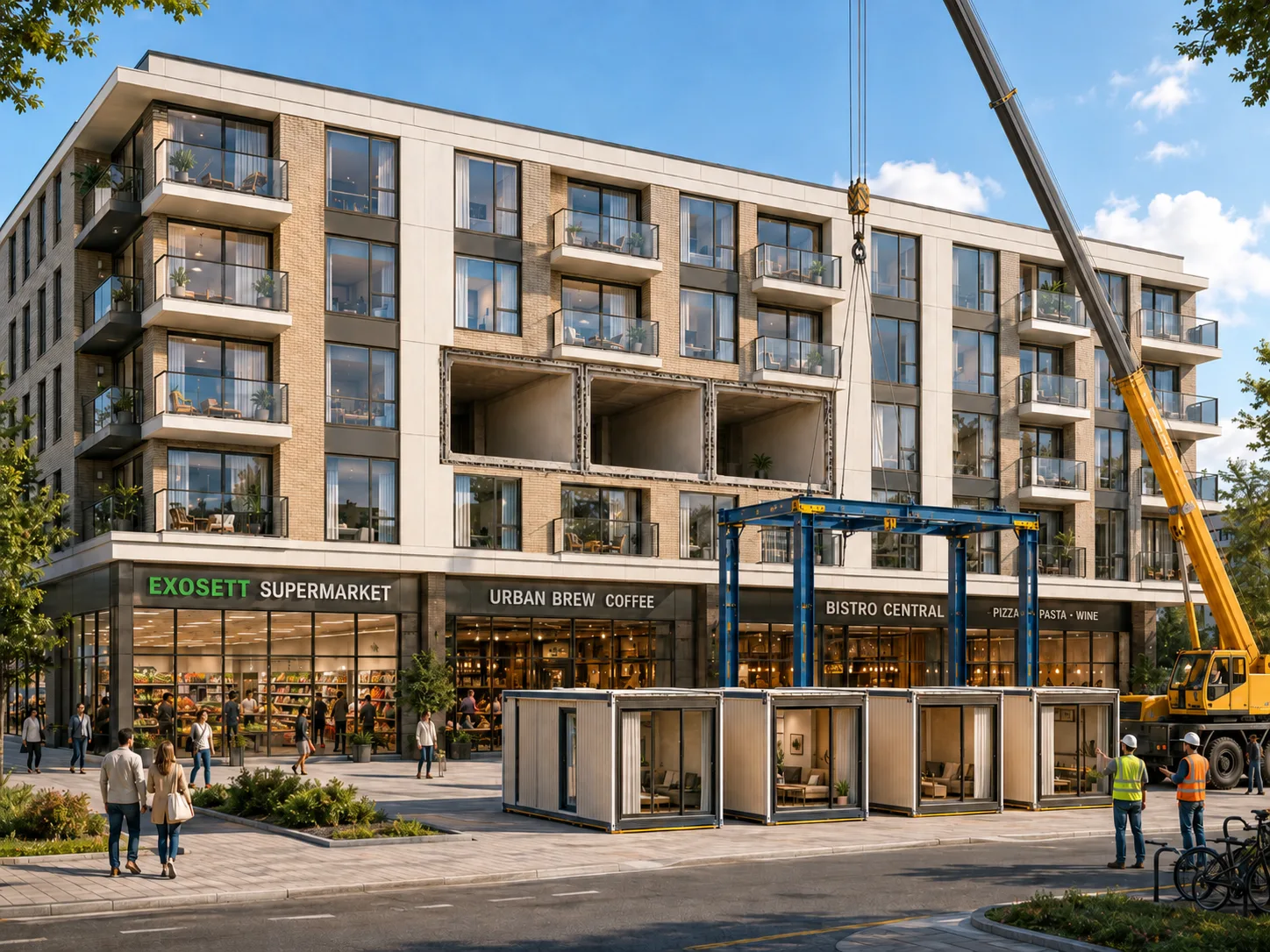
We were among the first residents to move into the building. At the time, all four of our children were still at home, so we took nine cells arranged as a three-storey, 3 × 3 home.
It was perfect.
The children had their rooms on the lower floor. The middle level held the family living space, with the entrance opening into a large open-plan kitchen and living area. Our bedroom, a spare room and some office space occupied the top floor.
Over the years, the children grew up and left home. Suddenly, our home felt much larger than we needed.
We still love living here, so rather than move away, we decided to downsize. We are giving up the three accommodation modules that form the lower floor of our home.
The vacated cells were soon taken by a young professional couple moving to the area. They wanted a four-module home, with space for children in the future. After some negotiation between neighbours, four adjacent cells could be made available for them.
Next week, the crane arrives.
It will remove our three lower cassettes, move several neighbouring cassettes to their new positions, and install four new ones for the incoming residents.
The building stays the same.
The homes within it simply evolve.
This story illustrates how an ExoSett system might be used. Actual implementations would require project-specific engineering, detailed design and any necessary regulatory approval.
What this story illustrates
ExoSett residential buildings can adapt as the needs of their residents change. Homes can become larger or smaller, and space can be redistributed within the building without demolishing or substantially rebuilding the supporting structure.