
ExoSett story
Simple utilities
Accessible, standardised services turn disruptive building work into a straightforward installation job.
As a plumber, I can tell you there is a big difference between working on a conventional building and working on an ExoSett one.
Last week, I was in a modern block of flats. A simple job turned into two days of cutting into walls just to find the pipe runs, followed by repairing and redecorating everything afterwards.
Today is different.
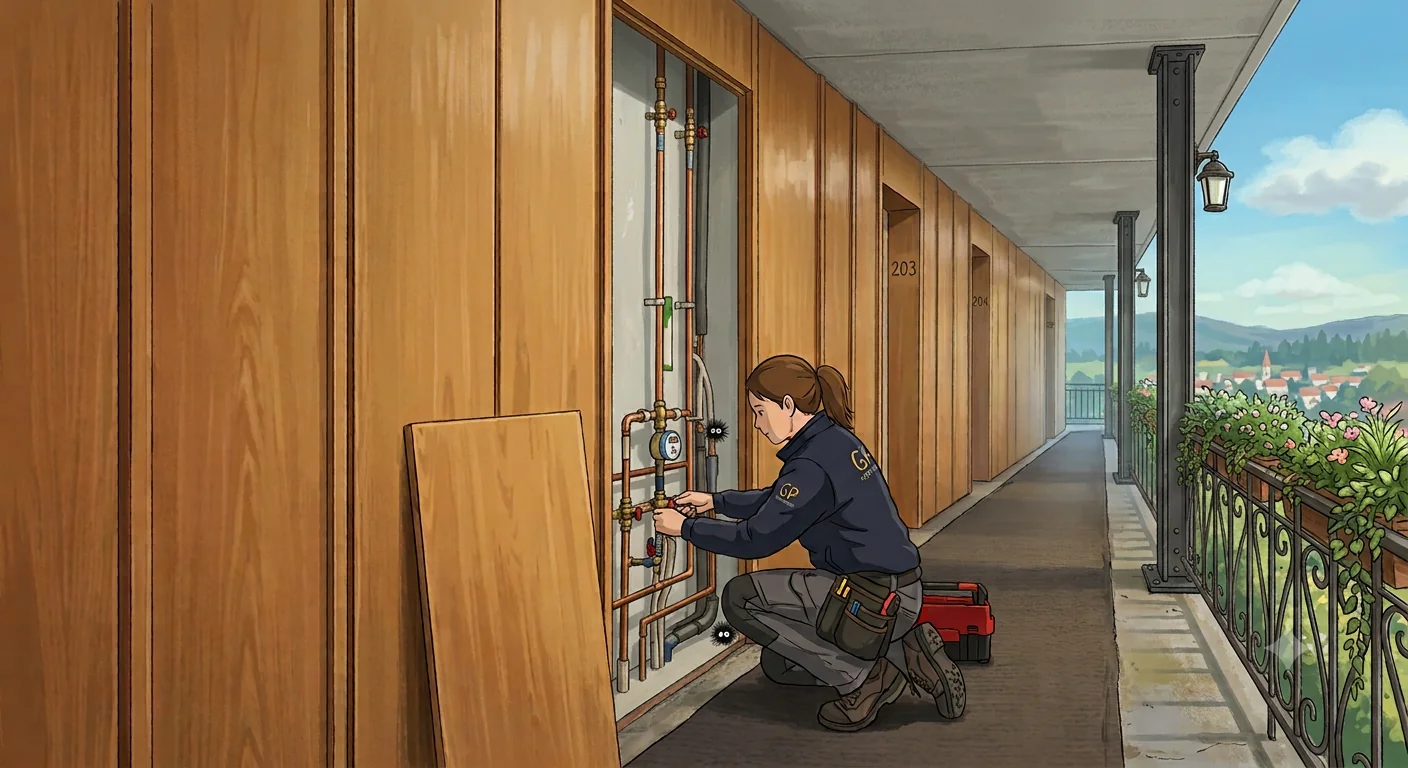
I am preparing connections for several new cassettes that will soon be installed in an existing ExoSett building. All the building services are routed through a dedicated service frame, separate from the accommodation modules. Water, waste, power and data run through accessible channels behind removable panels alongside the walkways.
No chasing into walls.
No lifting floors.
No guesswork.
I open the panel and everything is there. The routes are clear and the connection points are standardised. I install the new pipework, pressure-test it and close the panel again.
When the cassettes arrive next week, I will return to make the final connections.
No disruption to the existing homes.
No damage to repair.
Just a straightforward job.
This story illustrates how an ExoSett system might be used. Actual implementations would require project-specific engineering, detailed design and any necessary regulatory approval.
What this story illustrates
ExoSett separates building services from the accommodation modules and routes them through an accessible service frame.
This allows plumbers, electricians and other trades to inspect, extend and maintain services without cutting into finished walls or floors. Standardised routes and connection points make work easier to plan, reduce damage and shorten the time spent inside occupied homes.
The benefit is not only simpler installation. It is also easier maintenance, adaptation and replacement throughout the life of the building.